How to Load a Dryer Properly (And Why Overfilling Costs You Time)
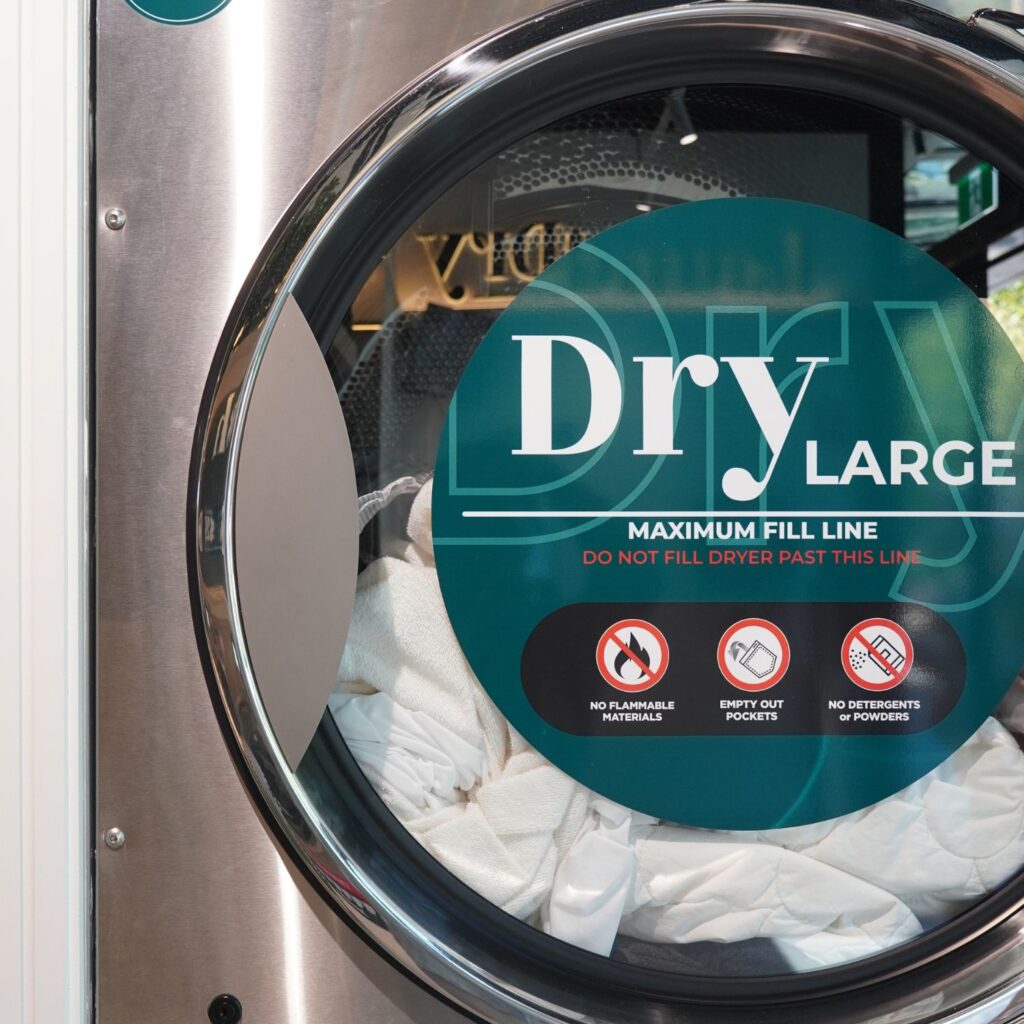
The rule for loading a dryer is simple: fill it up to the maximum line and no further. Clothes don’t dry from heat alone — they dry because warm air moves around every item and carries the moisture away. Pack the drum too tightly and that airflow stops, leaving you with a hot load that’s still damp.
It’s the same trap as the washer. Squeezing in more feels like saving a cycle, but an overfilled dryer usually takes longer and finishes worse. Here’s what’s actually going on inside the drum.
Drying Is Airflow, Not Just Heat
A dryer works by pushing warm air through the load while the drum tumbles it. Two things need to happen at once:
- Tumbling separates the items so air can reach every surface.
- Airflow carries the evaporated moisture out of the drum.
Overfill the drum and both stop working. Clothes stop tumbling and start moving as one packed mass, and the warm air can’t get through. The moisture trapped in the middle has nowhere to go — which is why you pull out a load that’s hot on the outside and still wet in the centre.
Lower the heat and it doesn’t help. A circulation problem isn’t a temperature problem; you’ll just run a longer cycle and expose your fabrics to more sustained heat, not less.
What Overloading Actually Costs You
The effects add up quickly:
- Longer cycles. Restricted airflow means the dryer works harder for longer to reach the same result.
- Uneven drying. Thick seams, pockets and the centre of the load stay damp while everything else is done.
- Wasted money. An overloaded dryer can run noticeably less efficiently than a properly loaded one — and if you have to run a second cycle, you’ve paid twice.
- Fabric wear. Extra friction between tightly packed items causes pilling and damage, especially on lighter garments.
- Lingering damp smell. Moisture trapped in the middle of a packed drum doesn’t escape, and that’s what causes that stale smell a day later.
The counterintuitive bit: one big load split into two medium loads often takes less total time. Each cycle runs efficiently to completion instead of running long and still finishing damp.
How to Load Your Dryer, Step by Step
- Fill to the max line only. Around two-thirds to three-quarters full is the sweet spot — that empty space is working space.
- Shake each item out before it goes in. Clothes come out of the washer twisted and balled up. Shaking them loose lets them tumble and dry properly from the start.
- Drop items in loosely. Never press or pack the load down.
- Group similar weights together. Towels and jeans dry far slower than t-shirts. Mix them and you’ll be re-running the cycle for the towels while the light items over-dry.
- Give bulky items their own cycle. A doona or heavy bedding takes up much more effective space than its weight suggests, and needs room to open up and tumble.
Why Towels Deserve Their Own Load
Heavy cotton holds a lot of water and dries slowly. Put four towels in with a load of shirts and the shirts finish long before the towels do. You either pull out damp towels or you run the whole load again — over-drying everything else in the process. Keeping them separate is faster and gentler on your clothes.
At LaundDry our dryers come in 14 and 20 kg. Give a load of towels or a doona one of the 20 kg dryers, so everything has room to tumble.
The Bottom Line
The max line isn’t a limit on how much you can dry — it’s the point where the dryer works best. Load to the line, shake items out, and keep heavy and light fabrics apart. You’ll get evenly dry clothes in one cycle instead of a hot, damp load and a second round.