Why Your Activewear Still Smells After a Wash
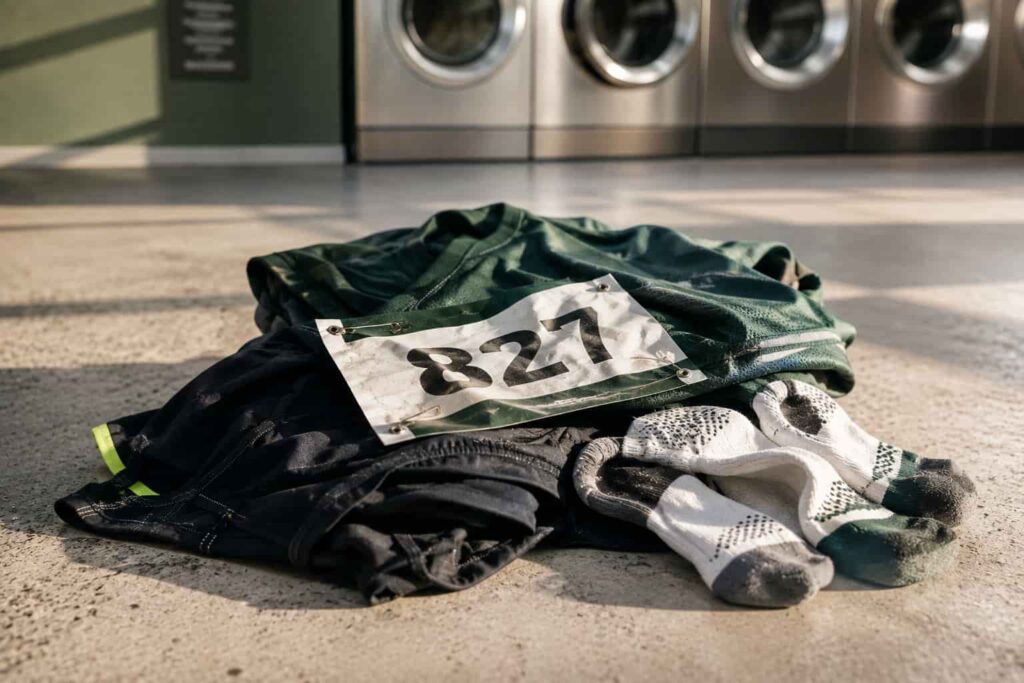
You pull your gym top out of the wash, it smells clean, you put it on — and ten minutes into your workout, that sour funk is back. You’ve washed it three times. It still happens.
It isn’t your machine, and it isn’t you. It’s the fabric, and almost everything people do to fix it quietly makes it worse.
TL;DR
- The smell isn’t leftover sweat or dirt — it’s bacteria living inside synthetic fibres, feeding on body oils the wash never fully removes.
- More detergent doesn’t reach the bacteria and leaves residue that traps odour against the fibre.
- Fabric softener coats technical fabric in a waxy film that seals odour in and ruins its moisture-wicking.
- Overloading a small apartment machine is the single most common cause — clothes can’t move, so they never really get clean.
- The fix is space, volume and time: a bigger drum, a longer cycle, no softener, and the occasional vinegar soak.
Why Activewear Smells When Cotton Doesn’t
Here’s the part that surprises people: sweat is almost odourless when it leaves your skin. The smell comes from bacteria that feed on the oils in your sweat and release the compounds we recognise as “gym funk.”
Cotton and synthetics handle those oils completely differently. Cotton absorbs water, so during a wash the oils lift and rinse away fairly easily. Polyester and nylon do the opposite — they’re designed to repel water, which is exactly what makes them quick-drying and good at wicking. But that same water-repelling nature means they cling to oil instead.
A 2014 study found polyester T-shirts showed significantly higher odour intensity than cotton after a single workout, because synthetic fibres selectively harbour the most aggressive odour-producing bacteria. The fibres have a microscopically rough, tubular structure full of tiny grooves, and bacteria shelter deep inside them where detergent simply doesn’t reach.
So the bacteria survive the wash. They dry into the fabric, dormant. The moment you sweat into the shirt again, your body heat and fresh moisture reactivate them — and the smell is instantly back.
Takeaway: You’re not failing to clean your gym gear. The fabric is built to hold onto the exact thing that causes the smell, and a normal wash barely touches it.
Mistake 1: Adding More Detergent
This is the natural response — it smells, so use more soap. It backfires for two reasons.
First, extra detergent doesn’t get inside the fibre where the bacteria actually live. It works on the surface, and the surface was never the problem. Second, a small apartment machine can’t rinse all that extra soap out in a standard cycle. The leftover detergent dries into the fabric as residue — and that residue is sticky, so it traps odour compounds against the fibre instead of releasing them.
The result is a shirt that smells vaguely of soap when dry and sour the moment you move. You’ve added a second layer to the problem.
Takeaway: Use the correct dose, never more. If anything, activewear does better with slightly less detergent and a more thorough rinse.
Mistake 2: Reaching for Fabric Softener
Fabric softener feels like it should help — it’s literally sold on freshness. On technical fabric it’s one of the worst things you can do.
Softener works by leaving a coating on the fabric. On synthetics, that coating becomes an additional film that traps odours even more effectively — you’re sealing the bacteria in rather than washing them out. Worse, that same waxy layer clogs the tiny spaces that make activewear breathable, so your gear stops wicking sweat and starts holding it against your skin. You lose the one property you paid for.
Takeaway: Never use fabric softener on activewear. If you want the fibres refreshed, a splash of white vinegar in the rinse does the opposite job — it strips residue instead of adding it.
Mistake 3: Overloading a Small Apartment Machine
If you live in a Wentworth Point apartment, your machine is probably compact — and this is the biggest hidden cause of smelly gym gear.
Washing isn’t just water and detergent. Clothes get clean through mechanical action — the tumbling and movement that physically works water and detergent through the fabric. Cram a small drum full and that movement stops. The clothes move as one packed lump, the water can’t circulate, and the parts pressed in the middle barely get washed at all.
Stuffing a compact machine to save a load means every item gets a fraction of the cleaning it needs. For odour-holding synthetics, that’s the difference between “fresh” and “smells again by the warm-up.”
Takeaway: Fill the drum loosely — around three-quarters full at most. If your activewear is packed in tightly, it isn’t getting clean no matter what you add to the water.
Why Water Volume Beats Water Temperature
Everyone asks about temperature. It matters less than you’d think — and it’s not the lever most people assume.
Hot water helps dissolve oils, but most activewear care labels warn against high heat, because it damages elastane and the technical finish. So you’re often stuck washing cold anyway. The good news: for getting odour out, water volume and cycle length matter more than temperature.
Bacteria and oils buried in synthetic fibres need to be flushed out, and that takes plenty of water moving freely through fabric that has room to tumble, over a long enough cycle to actually work. A short, cold, cramped cycle fails on all three counts. A generous, full-length cycle in a drum with space succeeds even at lower temperatures — because the water finally reaches the fibre and carries the oils away.
Takeaway: Don’t obsess over heat. Prioritise a machine with enough water and a long enough cycle, and give the load room to move.
The Practical Fix, Step by Step
Here’s the routine that actually works, built around the fibre instead of fighting it:
- Turn garments inside out. The smell lives on the inside, against your skin — so that’s the surface that needs to face the water.
- Pre-soak stubborn items in a vinegar solution. Roughly one cup of white vinegar per four litres of cold water, for 30 minutes. Vinegar lowers the pH to suppress the odour bacteria and dissolves the residue that traps smell against the fibre.
- Use the right amount of detergent — not more. A dedicated activewear or sports detergent is a bonus, but a correct dose of normal detergent works.
- Skip the fabric softener entirely. Every single time.
- Don’t overload. Give the load room to tumble. This is the step most people skip and the one that matters most.
- Choose a full-length cycle with a proper rinse. Volume and time do the heavy lifting.
- Air-dry or tumble on low, and dry fully. Damp synthetics left in a gym bag or a pile are a bacteria breeding ground — the smell will be back before you’ve even worn them.
When It’s Worth Handing the Load Over
Sometimes the honest answer is that your machine isn’t the right tool. A compact apartment washer physically can’t provide the water volume and drum space a smelly synthetic load needs — you’re managing the problem by hand, on repeat, forever.
If your gym gear has crossed into permanently funky, or you’re simply tired of the routine, a large-capacity machine solves the mechanical side in one go: more water, more room to move, a longer cycle. That’s exactly the situation our machines at LaundDry in Wentworth Point are built for — and if you’d rather not think about it at all, our Wash-Dry-Fold service handles the whole thing, softener-free, and hands it back fresh.
The Bottom Line
Your activewear smells because synthetic fibres are designed to hold the oils that odour bacteria feed on, and a cramped cold wash with extra detergent and softener actively locks that smell in. Reverse all three: right dose, no softener, room to move, and enough water and time. Do that, and the funk finally lets go.