How to Load a Washing Machine Properly (And Why Overloading Ruins Your Wash)
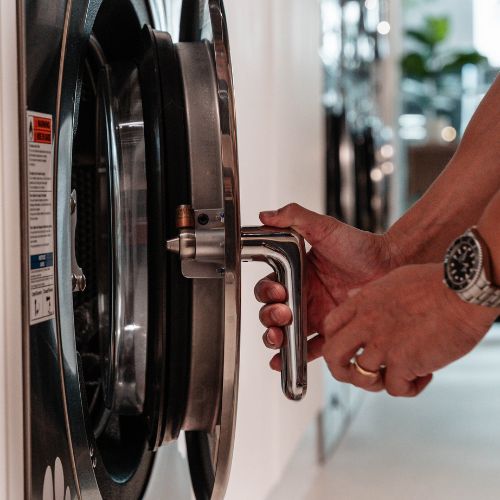
The simplest rule for loading a washing machine: fill it up to the line on the glass door, and no further. That gap at the top isn’t wasted space — it’s the room your clothes need to tumble. Without movement, water and detergent can’t reach the fabric properly, and your wash comes out noticeably less clean.
Cramming in one more towel feels efficient. It isn’t. Here’s what’s actually happening inside the drum, and why a little empty space does more for your laundry than an extra cycle would.
Three Things Clean Your Clothes — Not Two
Most people think laundry gets clean from water and detergent. That’s only two-thirds of the story. A good wash depends on three things working together:
- Water — carries detergent through the load and rinses soil away.
- Detergent — lifts dirt, oils, and odours out of the fabric.
- Mechanical action — the tumbling and agitation that physically loosens soil from the fibres.
Miss any one of these and the wash suffers. And mechanical action is the one that disappears the moment you overfill the drum.
What Actually Happens When You Overload
When a drum is packed too tightly, water flow is restricted, proper agitation is prevented, and detergent gets trapped in fabric folds. The clothes stop tumbling and start moving as one solid mass — which means the parts pressed in the middle barely get washed at all.
The knock-on effects add up:
- Uneven cleaning. Some items come out fine, others still carry stains or odour.
- Detergent residue. Soap trapped in fabric folds can leave white streaks and leave dirt behind.
- Poor rinsing and spinning. Tightly packed fabric traps water, so loads come out heavier and wetter — which then costs you more drying time.
- Fabric wear. Without enough water to cushion them, fabrics rub against each other with real force, causing pilling on knitwear and thinning in cotton.
The irony: overloading to save a cycle often means rewashing the whole load anyway. One properly loaded wash beats one overstuffed wash every time.
The Line on the Door Is Your Guide
At LaundDry, every machine has a line marked on the glass door. Load up to that line and stop. It’s the easiest possible check — no weighing, no guessing.
As a general rule, filling a drum to around three-quarters of its capacity gives clothes the room they need to move freely and wash properly. The line on our doors is set to exactly that point.
How to Load, Step by Step
- Load up to the door line — not above it.
- Drop items in loosely. Don’t press or pack them down to make room.
- Leave the gap at the top. That space is what lets the load tumble.
- Mix item sizes. A drum of only bulky items (towels, jeans) needs more room than mixed clothing, since heavy fabrics absorb far more water.
- Separate heavily soiled items. Running a slightly smaller load for stained or very dirty items gives more agitation and a higher detergent-to-fabric ratio, which improves the result.
Not sure which size to use? Our washers run from 9 to 27 kg: 9 kg for an everyday load, 14 or 18 kg for towels and sheets, and 27 kg for doonas and bulky items. See all machine sizes and prices.
When in Doubt, Split the Load
If you’re staring at a pile that’s clearly above the line, the answer is two loads, not one determined shove. It feels like the slower option, but it’s usually faster overall — you avoid rewashing, and properly washed items spin drier, so they need less time in the dryer too.
The Bottom Line
Space is not wasted capacity — it’s part of how the machine cleans. Load to the line on the glass door, keep things loose, and let your laundry tumble. That single habit does more for wash quality than any detergent upgrade or longer cycle ever will.